By Wahome Ngatia
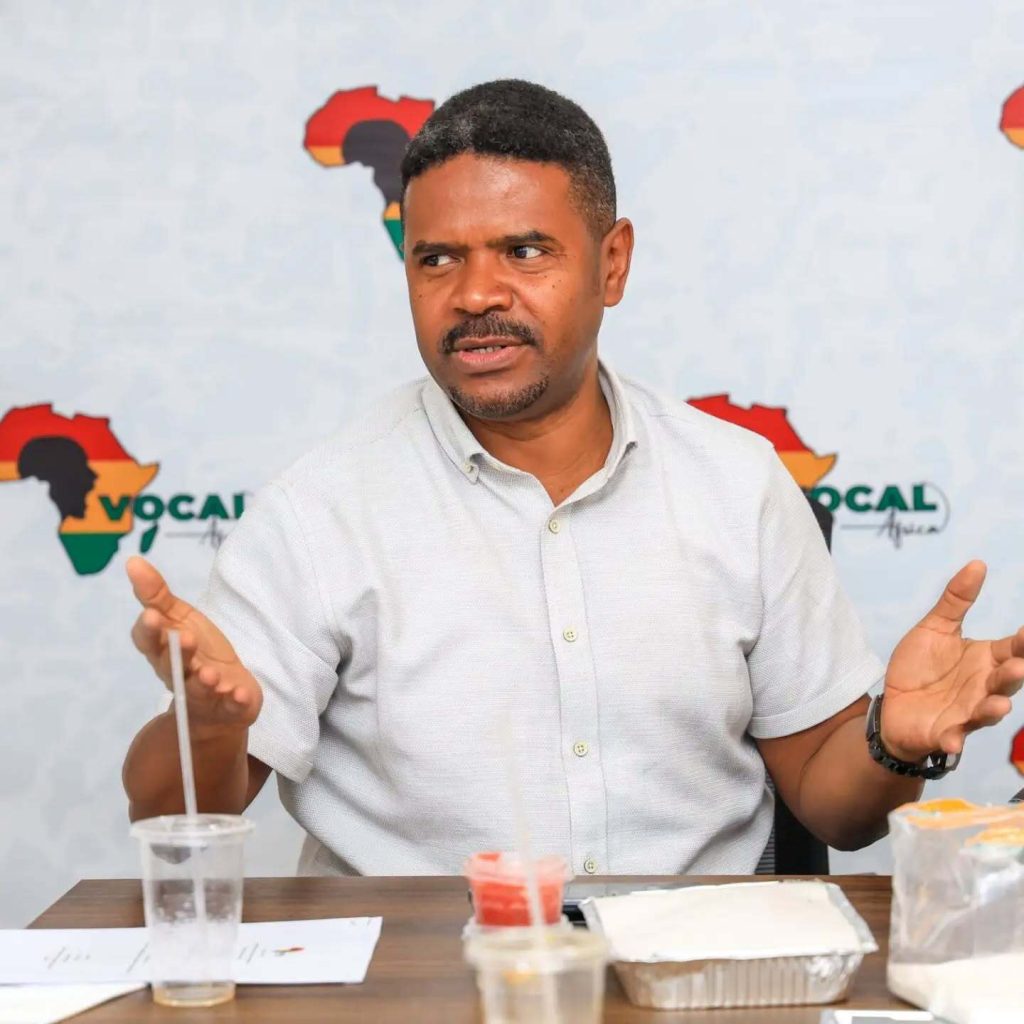
On the eve of the NGO Awards, we spoke to Oliver Waindi — Executive Director of Uraia Trust — who shared some powerful, mind-blowing insights into what makes an NGO truly great. You’d want to take his word seriously: he heads one of Kenya’s most successful NGOs.
Uraia Trust boasts a national footprint and more than 20 years in the governance space. According to Waindi, they handle the finances of many reputable organisations — like FIDA, KHRC, Katiba Institute, among others.
The organisation is also synonymous with civic education and has played a visible role supporting Kenyans through Independent Electoral and Boundaries Commission (IEBC), partnering to encourage citizens to register and vote. “It’s not our role to go and tell Kenyans to register as voters then vote,” he told me. “We partner with IEBC to do that. They’re mandated to educate and rally Kenyans to take part in their civil duty.”
With that experience and impressive track record, here are the indices Oliver uses to judge a credible NGO:
Legal and above board
Oliver says that even the most famous or appealing organisation — if it wants to be credible — must operate strictly within the law. Its programs must align with the constitution and avoid any form of violation. Leadership and staff must be people of integrity, with clean records and no trace of criminal or shady dealings.
Another critical dimension is funding: a trustworthy NGO should refuse donations from individuals or entities involved in crime, corruption, or human trafficking. In essence: no laundering money under the guise of charitable giving.
Proper governance structure
Every credible NGO has a leadership team that is qualified, trustworthy, and accountable. Appointed individuals should be “clean as a whistle,” with no criminal record.
As the scholar Dr. Saumya Arora — writing for the Funds for NGOs platform — argues, great leaders are good communicators, empathetic, and genuinely passionate about serving their community. They don’t just manage programs — they care, they understand, and they work diligently.
Paying taxes and meeting statutory obligations
Hon. Nderitu Muriithi, the Kenya Revenue Authority (KRA) board chair, recently lauded NGOs for contributing at least KSh 53 billion annually to the taxman. Even NGOs that enjoy tax-exempt status still must pay PAYE, SHIF, NSSF, and housing levy deductions for their employees.
Moreover, NGOs are required to submit annual financial statements to the Public Benefits Organization Regulatory Authority (PBORA). Any organisation worth its salt does not shy away from statutory compliance.
Accountability
An organisation that doesn’t answer to anyone is a red flag. Trustworthy NGOs have a board of directors or a management committee that oversees operations. They hold annual general meetings and publish reports — to members, donors, and the public — accounting for every resource received and spent. They also submit to regular audits.
Transparency and openness are not optional; they are the backbone of legitimacy.
Diverse staffing and national outlook
Oliver emphasizes the importance of a workforce that reflects the nation’s diversity. Credible NGOs should not employ people from only one or two ethnic backgrounds. Rather, they should build broad-based stakeholder buy-in and enjoy nationwide confidence.
For instance, many assume MUHURI (Muslims for Human Rights) serves only Muslims — but that is far from the truth. As Oliver says, “They serve everyone not just muslims.”
It is also vital that the organisation is known for something specific — a niche, a field of excellence. When women face domestic violence, they go to FIDA. When they need data on human-rights abuses in Kenya, they turn to KHRC or Amnesty International Kenya. Good NGOs build trust in their specialty.
Finally, staff should be treated with dignity and given fair compensation for their work.
Technologically updated and environmentally conscious
In a world where technology advances at breakneck speed, NGOs need to keep up. Today, a global survey shows that about 92 percent of NGOs have a website (and 87 percent of those are mobile-compatible), while 72 percent accept online donations. Use of Customer Relationship Management (CRM) software to manage donor data is now common — roughly 45 percent of NGOs worldwide rely on it, with many using cloud-based CRMs.
Social media has become a powerful tool: about 87 percent of NGOs globally use it as part of their digital strategy, often to engage supporters, share updates, and raise funds.
By harnessing technology — from data-analysis tools to crowdfunding platforms and robust online outreach — NGOs can manage resources better, engage more effectively, and scale impact while keeping costs relatively low.
But beyond tech-savvy systems, Oliver argues that great NGOs should also champion environmental responsibility. That might look like using biodegradable materials, reducing waste, or partnering with organisations to plant trees. Some NGOs around the world are already leading by example. For instance, Eden: People+Planet (formerly Eden Reforestation Projects) has planted hundreds of millions of trees in developing countries — restoring forests, reducing carbon emissions, and creating sustainable livelihoods.
As climate change accelerates, NGOs must not only fight social ills — they must also help safeguard our planet.
Why this matters
Not every NGO fits into a one-size-fits-all template. But the skeleton that Oliver Waindi outlines — legal compliance, moral integrity, sound governance, accountability, diversity, technological adeptness, and environmental awareness — gives donors and the public confidence that an NGO is real, effective, and worthy of support.
If more NGOs adopted these principles, not only would trust in civil society rise — but the impact on communities and our planet would be transformative.