By Wahome Ngatia
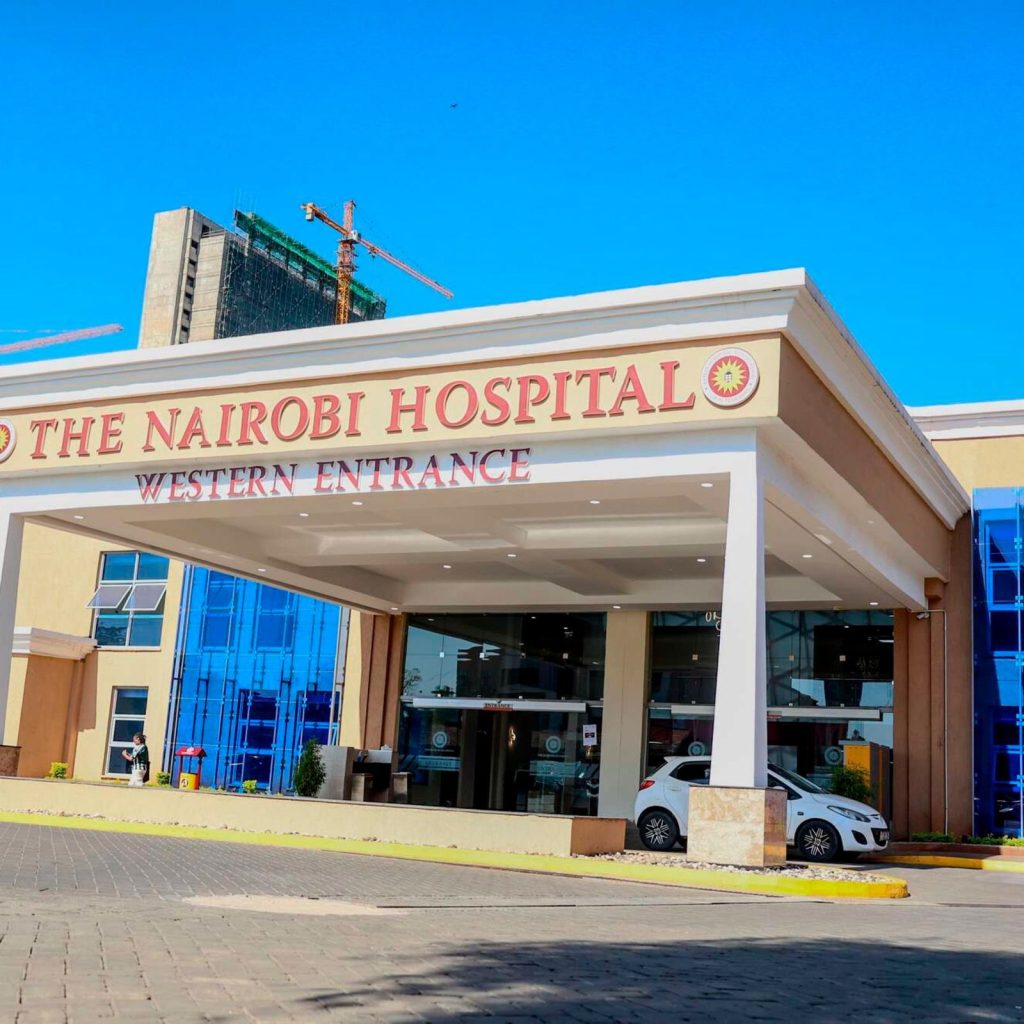
Nairobi Hospital, one of the most prestigious health facilities in East and Central Africa, might be in wrangles right now — but have you ever stopped to ask what kind of organisation actually owns and runs it? Behind the gleaming corridors, the specialist wings, and the reputation that draws patients from Kigali to Mogadishu, sits a quietly powerful non-profit structure that most people in civil society, development finance, and the NGO sector have never paused to examine. They should.
The Kenya Hospital Association (KHA) — the body that has governed Nairobi Hospital since its founding in 1954 — is not a private company hunting for shareholder returns. It is a membership-based, non-profit organisation limited by guarantee. And right now, it is at the centre of a boardroom storm that has pulled in no less than President William Ruto, the institution’s sitting patron.
The Crisis in Context
The current wrangles at Nairobi Hospital are, at their core, a governance dispute — a clash over board legitimacy, leadership appointments, and institutional direction. That Kenya’s Head of State is embroiled in it is not incidental. Every sitting president of Kenya is constitutionally designated the patron of the KHA, a tradition that underscores just how institutionally significant this organisation is. When the boardroom fractures, the patron’s office is drawn into the crossfire. It is awkward, consequential, and entirely predictable for an organisation of this scale and structural complexity.
But strip away the political drama, and what you have is a fundamentally important lesson in non-profit governance, investment, and sustainability.
The Architecture of the Kenya Hospital Association
KHA is a company limited by guarantee — a legal structure that non-profit practitioners across East Africa would do well to study closely. Unlike a company limited by shares, there are no equity stakes, no dividends, and no private enrichment. Members do not “own” the organisation in the commercial sense; instead, they guarantee a nominal sum — typically a token amount — in the event of winding up. Surpluses generated are returned to the organisation’s mission, not distributed.
The KHA commands a membership of approximately 3,000 individuals — a formidable constituency drawn largely from Kenya’s medical and health fraternity: doctors, surgeons, nurses, allied health professionals, and institutional members from the broader healthcare ecosystem. This membership base is not passive. It is the democratic engine of the association, electing representatives who form the governance architecture through which the board is constituted.
The board itself is drawn from this membership pool — professionals with domain expertise who serve in a fiduciary capacity, expected to steward an organisation that generates between Ksh 1.3 billion and Ksh 2 billion in annual revenues. That is not charitable income. That is enterprise-scale turnover, generated through the delivery of specialist healthcare services on a cost-recovery model.
The PBO Act and the Permission to Invest
This is where it gets instructive for NGO leaders across the region. Kenya’s Public Benefit Organisations (PBO) Act provides a framework that many in the sector are yet to fully leverage. The Act explicitly permits non-profit organisations to engage in income-generating activities and invest in profit-making ventures — provided that the returns are ploughed back into the organisation’s public benefit mandate.
This is not a loophole. It is a policy signal that civil society organisations should build financial resilience by diversifying revenue streams. The KHA model — running a billion-shilling hospital not to enrich members but to sustain and expand health services — is precisely this principle in action, institutionalised over seven decades.
For NGO leaders watching the Nairobi Hospital saga unfold, the lesson is not to avoid complexity. It is to build governance structures robust enough to manage it.
A Model Worth Studying
The KHA’s durability — seven decades of unbroken institutional continuity — is a testament to what membership-based, non-profit governance can achieve when anchored to a clear public benefit mission. The current turbulence does not negate that legacy. It tests it.
What the sector must take from this moment is not schadenfreude, but scrutiny. How are your boards constituted? Does your membership have genuine democratic agency? And critically — are you using every tool the PBO Act affords you to build an organisation that does not merely survive grants, but generates the revenues to outlast them?
Nairobi Hospital did not become a regional medical powerhouse by accident. It was built by a non-profit that dared to think like an enterprise — and governed like a public institution. That is the disruption the development sector needs to study.
Wahome Ngatia is a seasoned commentator and journalist specialising in NGOs, non-profits, and the development sector.