By Wahome Ngatia
Fifi Ruhara was 31 years old when cancer took her. She was a voracious reader, a sharp and generous mind, and a friend. In the months after her death, her family did what grieving people sometimes do when they don’t know how else to hold a loss — they built something. They named it after her.
The Fifi Ruhara Foundation exists for a simple reason: to put books and educational materials into the hands of children whose parents cannot afford them. It targets schools in low-income areas, the kind of institutions that are easy to overlook and harder to sustain. I joined as a volunteer, drawn in by the mission and by the memory of Fifi herself.
What I found when I arrived was a school carrying more weight than books could fix. Fairview Academy’s students needed desks to sit at, sanitary towels, socks, underwear — the foundational dignities that more affluent schools take for granted. A foundation named for a reader was suddenly contending with the full, unglamorous breadth of deprivation. We couldn’t solve all of it. So we focused on what we could: ten lockers for pre-teens, sanitary supplies for girls, undergarments and socks for boys. It wasn’t a comprehensive solution. It was a start.
Then something unexpected happened.
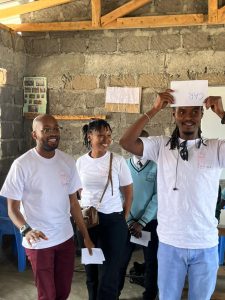
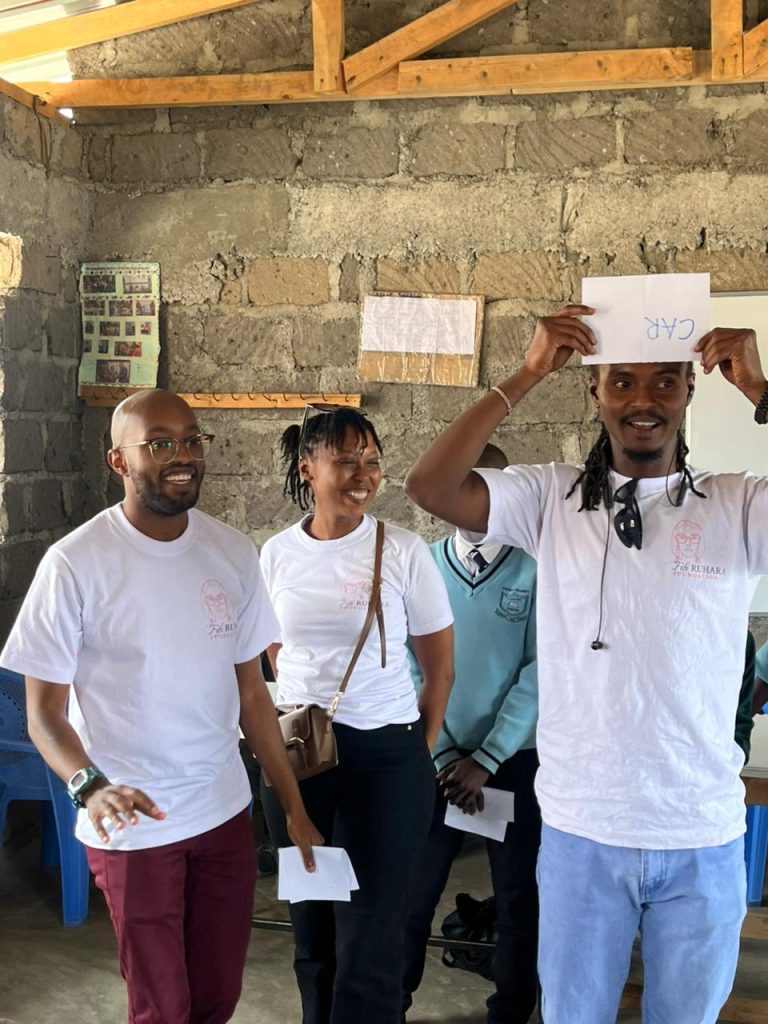
One of our members happened to know Thomas Erikson, the Swedish author of Surrounded by Idiots. When Erikson heard what we were doing, he donated 38 copies of his book. We organized an event around the handover — motivational talks, lunch, phones raised to capture the moment. Ordinary, perhaps. But the children showed up with something in their eyes that I hadn’t anticipated: the tentative, fragile look of people beginning to believe that someone sees them.
When Erikson saw our footage, he pledged more books. Word spread to Swedish philanthropists, who didn’t just write a check — they booked flights. They came to Nairobi, walked into Fairview Academy, and distributed books, food, and ten desks and chairs that the school had lacked for years due to chronic underfunding. The school’s director, Mrs. Sagalla, told us that her students had long been using school as a refuge from difficult home environments. What they received that day, she said, was something rarer than supplies: a ray of hope.
The Swedish donors committed to continued support — contingent on one condition. The foundation had to be formally registered under the Public Benefit Organization Regulatory Authority. That process is currently underway.
What this experience taught me is something that sounds simple but is easy to underestimate: genuine impact attracts resources. You don’t have to manufacture a compelling story if the work is real. The story already exists. Your job is to tell it honestly, and to tell it well.
This matters now more than ever. Across the globe, government funding for civil society and development work is contracting as defense budgets expand and donor priorities shift. The gap is real, and it is widening. Into that space, private philanthropy is beginning to move — but it does not move blindly. It moves toward proof. Toward emotion. Toward the unmistakable texture of truth.
That’s what storytelling is, at its core: not content strategy, not marketing, but the art of making invisible people visible. Because people give to people, not to institutions. They respond to a child’s face, a mother’s voice, a school director’s quiet gratitude — not to impact assessments and donor frameworks, however necessary those may be. The most effective development communication has always understood this. The most effective organizations live by it.
And the tools required are humbler than you might think. There’s a joke that circulates on X, formerly Twitter: don’t skip the low quality videos. It lands because it’s true. Eric Omondi’s Sisi kwa Sisi campaign, the TikTok-fueled outpouring for a teenage boy caring for his ailing father — these are not polished productions. They are real, and realness is what moves people. High production value can elevate a story. It cannot manufacture one.
If you are leading an NGO navigating a shrinking funding landscape, or an individual who wants to start something of your own, the prescription is not complicated: find the place where your effort meets genuine need. Make a difference there — a specific, tangible, honest difference. Then document it with care, and trust that people, given the chance to see it, will respond.
Fifi Ruhara loved books. Her family built a foundation so that love could outlive her. A Swedish author sent 38 copies of his book to a school in Nairobi. Philanthropists flew across the world to deliver ten desks. None of this was inevitable. All of it began with one person deciding to show up.
That is still, after everything, how change begins.