By Wahome Ngatia
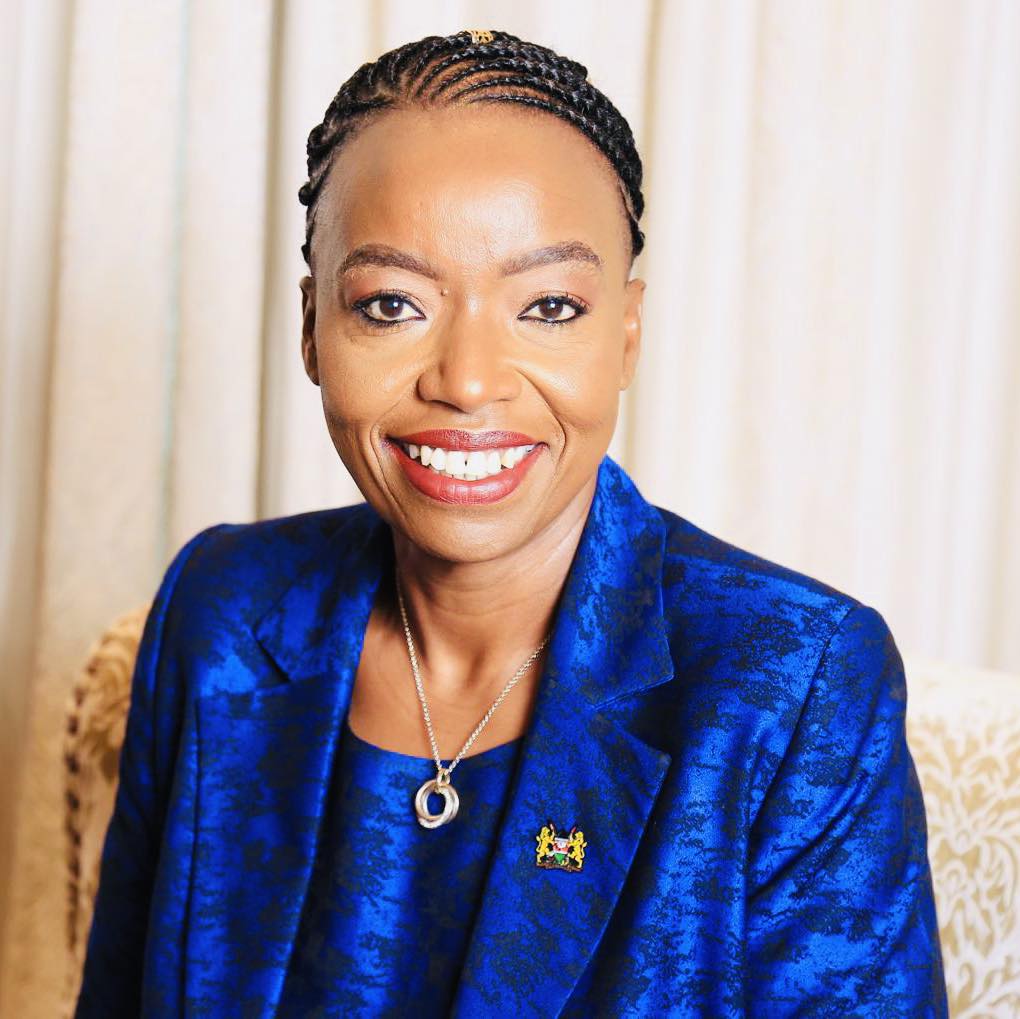
When António Guterres announced the appointment of Monica Juma as Executive Director of the United Nations Office on Drugs and Crime and Director-General of the United Nations Office at Vienna, the statement was brief but unmistakably emphatic.
The United Nations Secretary-General described the Kenyan diplomat as “a strategic senior leader with a depth of expertise, experience and knowledge spanning public policy making, execution and academia across critical areas of security, diplomacy and governance.”
The role carries the rank of Under-Secretary-General — third in the UN hierarchy — placing Juma among an elite tier of global officials who answer directly to the Secretary-General. She will succeed Egypt’s Ghada Fathi Waly, who served a full six-year term, and will oversee UNODC’s mandate across more than 150 countries: combating drug trafficking, transnational organised crime, corruption, and terrorism financing. These are not abstract policy portfolios. They are the fault lines along which nations fracture.
A career forged in policy and diplomacy
Juma’s trajectory into global diplomacy was neither accidental nor hurried. A scholar by training, she earned a doctorate from the University of Oxford after studying government and public administration at the University of Nairobi.
Her early professional life straddled research and policy work. She served at the Africa Policy Institute and later at the Africa Institute of South Africa, shaping debates on governance and security across the continent.
But it was her transition into public service that defined her reputation.
Juma steadily climbed Kenya’s diplomatic ladder — from Permanent Secretary roles to becoming Kenya’s ambassador to Ethiopia and permanent representative to the African Union and the Intergovernmental Authority on Development.
Her tenure placed her at the centre of regional security negotiations and continental diplomacy.
Back in Nairobi, successive administrations entrusted her with some of the state’s most strategic portfolios. She served as Cabinet Secretary for Foreign Affairs, Defence and later Energy, before becoming Kenya’s National Security Adviser and Secretary to the National Security Council.
Few Kenyan technocrats have navigated such a wide span of security, diplomacy and governance portfolios.
The assignment in Vienna
At the UN, Juma inherits an institution grappling with complex global challenges.
The United Nations Office on Drugs and Crime coordinates international action against transnational organised crime, drug trafficking, corruption, human trafficking and terrorism.
Its headquarters in Vienna serves as a nerve centre for international treaties, law enforcement cooperation and criminal justice reform across more than 190 member states.
The challenges awaiting Juma are formidable.
The global narcotics trade has evolved into a multi-billion-dollar enterprise intertwined with cybercrime, arms trafficking and illicit financial flows. Meanwhile, fragile states in Africa, Latin America and parts of Asia are increasingly entangled in organised criminal networks.
Navigating these realities requires diplomatic finesse as much as technical competence — balancing the priorities of major powers with the needs of developing countries.
For Juma, whose career has been shaped by security policy and multilateral negotiations, the role plays directly to her strengths.
Kenya’s growing footprint in multilateral diplomacy
Juma’s appointment is also a milestone for Kenya’s international profile.
For decades, the country has positioned itself as a diplomatic bridge between Africa and the global system. Nairobi hosts major UN agencies and remains one of the organisation’s principal hubs in the Global South.
Kenyan diplomats have historically held influential roles across the UN system.
Among them are Joseph Karanja, who served as President of the UN General Assembly in 1991; Achim Steiner, who once led the United Nations Environment Programme in Nairobi before heading the United Nations Development Programme; and veteran diplomat Martin Kimani, whose tenure as Kenya’s ambassador to the UN raised the country’s global diplomatic visibility.
Dr. Mukhisa Kituyi served two full terms — 2013 to 2021 — as Secretary-General of UNCTAD, becoming the first Kenyan and the first African to hold that position. A former trade minister and MP, Kituyi shaped global trade and development policy from Geneva at a moment when developing nations were demanding a more equitable rules-based order.
Ambassador Amina Mohamed, perhaps Kenya’s most versatile diplomat, served as Assistant Secretary-General and Deputy Executive Director of UNEP. She chaired the WTO General Council — the first woman to do so — and came within a vote of becoming WTO Director-General in 2020.
Each appointment reinforced Kenya’s reputation as a producer of technocratic diplomats comfortable navigating multilateral systems.
Juma’s elevation now adds another layer to that tradition.
A diplomat shaped by crises
Those who have worked with her often describe Juma as analytical and measured — traits honed in policy rooms where decisions carry geopolitical consequences.
Her years in defence and foreign affairs exposed her to the complexities of regional conflicts, counter-terrorism and multilateral negotiations.
That background may prove invaluable in Vienna, where the lines between crime, security and geopolitics increasingly blur.
Leading UNODC requires the ability to coordinate governments, international law enforcement agencies, NGOs and development actors — precisely the ecosystem Juma has operated in for much of her career.
The meaning of the moment
Beyond personal achievement, the symbolism of Juma’s appointment resonates across Africa’s diplomatic landscape.
For Kenya, it signals the maturation of a foreign policy tradition that has invested heavily in multilateral engagement.
For the United Nations, it places an African diplomat with deep security credentials at the helm of an agency confronting some of the most transnational threats of the twenty-first century.
But perhaps the deeper significance lies in what the moment represents.
Diplomacy today is less about ceremonial representation and more about navigating global systems defined by crime networks, fragile states and contested geopolitics.
Monica Juma arrives in Vienna not merely as a Kenyan envoy to the world — but as one of the world’s stewards of international order.
And if her career is any indication, she understands that in modern diplomacy, influence is rarely declared.
It is built quietly — policy by policy, treaty by treaty, and moment by moment — until the world suddenly realises who has been shaping the conversation all along.