By Wahome Ngatia
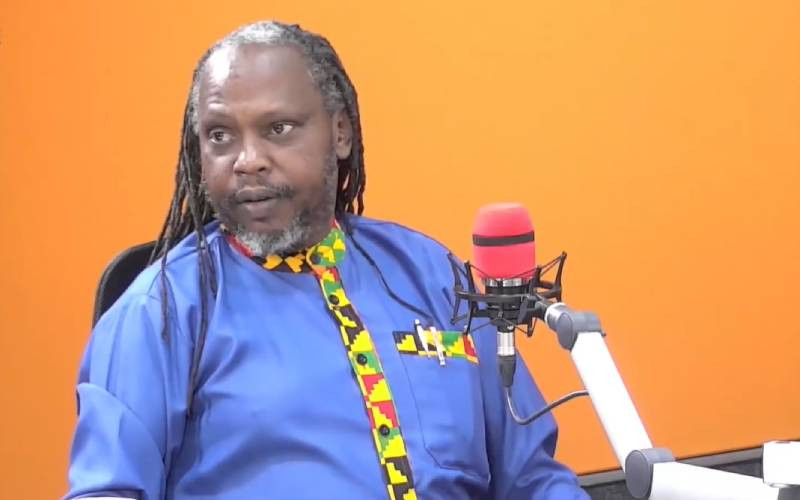
In an era when democratic backsliding often advances in the language of “security” and “order,” Mugambi Kiai insisted on clarity. The Constitution, he argued, was not self-executing. It required defenders. And for more than three decades, he was one of them — in courtrooms, boardrooms, newsrooms and the often-uncomfortable spaces where power meets scrutiny.
Kiai, who died on 23 February 2026 after a long illness, leaves behind a body of work that reads like a civic manual for modern Kenya: precise, unsentimental and unwavering in its defense of human dignity.
He belonged to a generation of activists forged in the crucible of one-party rule, when civil society was neither fashionable nor safe. His early association with the Kenya Human Rights Commission placed him at the heart of the country’s most consequential rights struggles. At KHRC, he was not merely a participant but a strategist — helping frame litigation, refine constitutional arguments and shape advocacy campaigns that challenged the overreach of executive power. Colleagues recall his disciplined approach: read the law closely, anticipate the state’s argument, and never surrender the moral high ground.
Yet Kiai understood that ideas must travel beyond court filings. As a columnist for the Daily Nation and the The Standard, he translated constitutional theory into public language. His essays were measured but piercing, warning against creeping authoritarianism, electoral complacency and the normalization of police excess. He rejected outrage as performance; instead, he practiced what might be called the discipline of dissent — careful reasoning, historical memory and a steady insistence that impunity corrodes institutions from within.
Regionally, his leadership at ARTICLE 19 expanded his focus from national reform to the broader architecture of civic space in Eastern Africa. There, he confronted the new frontiers of repression: cybercrime laws weaponized against critics, internet shutdowns during elections, and digital surveillance deployed without oversight. He argued that the digital sphere had become the new battleground for fundamental freedoms — and that civil society had to adapt with equal sophistication.
Earlier, at the Open Society Initiative for East Africa, Kiai invested in movement-building. He championed young activists, funded governance research and supported cross-border collaborations that recognized democracy as a regional project rather than a domestic affair. For NGO leaders, this may be among his most enduring lessons: institutions matter, but so do ecosystems. Durable change requires both.
What set Kiai apart was not volume but depth. He was less interested in visibility than in coherence — ensuring that advocacy aligned with constitutional principle, that litigation advanced long-term reform, and that public commentary elevated rather than inflamed debate. Friends describe him as intellectually rigorous, occasionally wry, and unafraid to critique even allies when strategy drifted from values.
In the days following his death, tributes from human rights defenders across Africa echoed a common refrain: he was a mentor, a conscience and a builder. Civil society leaders praised his clarity of thought. Younger advocates recalled his willingness to review drafts late into the night. Regional partners credited him with sharpening the analytical edge of freedom-of-expression work at a time when civic space was narrowing.
For NGO professionals navigating shrinking funding pools and expanding state scrutiny, Kiai’s life offers a quiet but firm reminder: credibility is capital. Institutions endure when they root their work in principle, evidence and solidarity.
Mugambi Kiai did not romanticize democracy. He understood its fragility. But he believed, stubbornly, that it could be strengthened — case by case, article by article, generation by generation. In that patient, principled labor lies his legacy.