By Wahome Ngatia
Every generation produces people who choose comfort and others who choose consequence. Hussein Khalid belongs firmly in the second category.
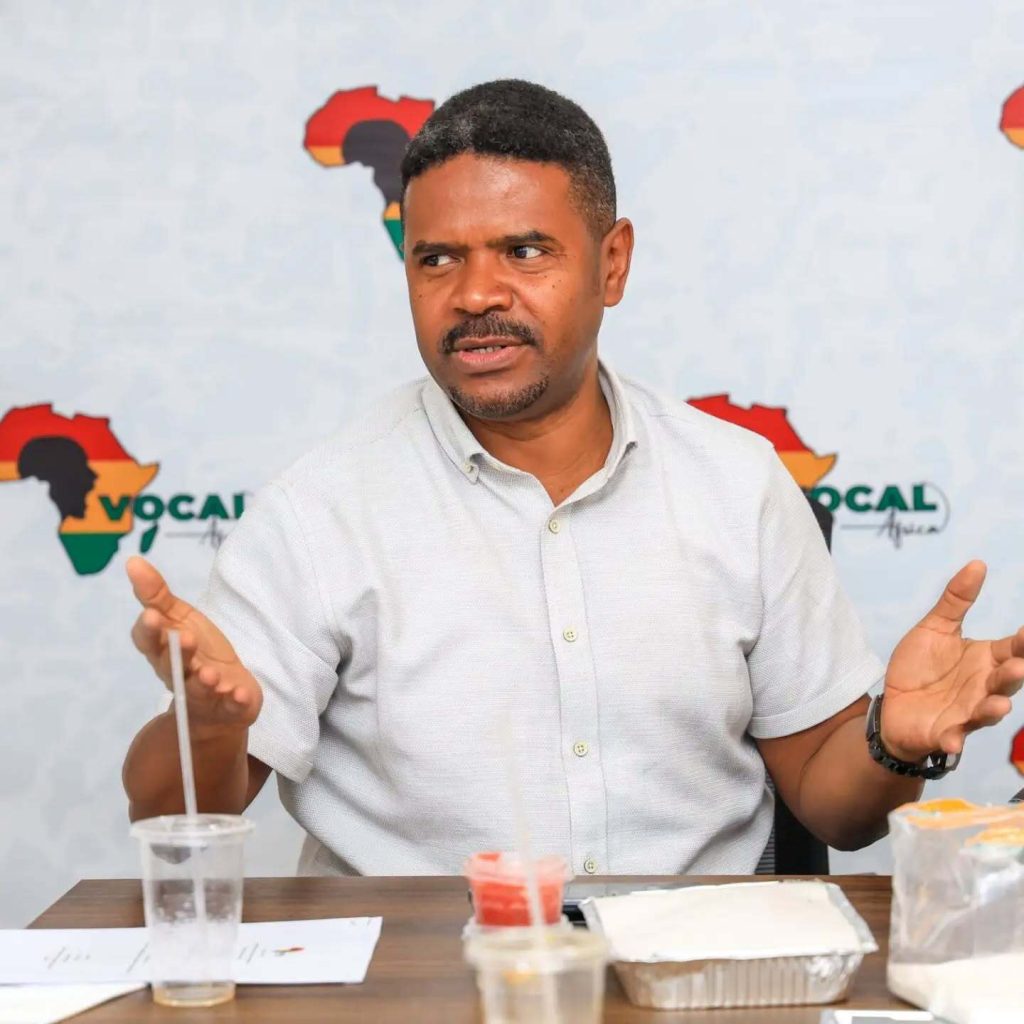
For more than two decades, the human rights defender has stood where few willingly stand—inside mortuaries identifying bodies, outside police stations demanding answers, in courtrooms defending constitutional freedoms, and beside families searching for loved ones who vanished without a trace. While many Kenyans know him today as the Chief Executive Officer of Vocal Africa, his story began long before television cameras and breaking news alerts found him.
It began with injustice
Born on March 15, 1980, in Mombasa as the fourth of eight children, Khalid grew up witnessing the inequalities that defined life for many communities along Kenya’s Coast. But one moment altered the course of his life forever. As a student at Jamhuri High School, he watched a police officer shoot an unarmed man in broad daylight before planting a gun beside the body. The official version claimed the victim had been a criminal killed in a shootout. Khalid knew otherwise because he had seen everything with his own eyes.
Another experience deepened his resolve. At just 16 years old, he was arrested for buying meat without carrying a national identity card and spent a night in police custody before his family secured his release. For many teenagers, it would have been a frightening memory. For Khalid, it became a lifelong calling.
Human Rights work
His journey into human rights work started at the Centre for Law and Research International (CLARION), where he worked under respected legal minds and immersed himself in legal research. Recording legal journals for a visually impaired lawyer sharpened his understanding of the law long before he stepped into frontline activism. He later joined the Kenya Human Rights Commission (KHRC), where he worked alongside some of Kenya’s leading constitutional advocates before moving to Muslims for Human Rights (MUHURI). At MUHURI, he became deeply involved in documenting arbitrary arrests, torture, enforced disappearances and police excesses, particularly along the Coast.
By 2012, Khalid believed the Coast region needed an organisation that could respond directly to the unique human rights challenges facing local communities. He founded Haki Africa.
What started as a regional organisation would become one of Kenya’s most recognisable human rights institutions.
Under his leadership, Haki Africa challenged extrajudicial killings linked to counterterrorism operations, defended communities affected by security crackdowns and represented vulnerable citizens who often had nowhere else to turn. The organisation itself became a target. During the height of Kenya’s anti-terror operations, Haki Africa and MUHURI were accused of supporting terrorism and had their bank accounts frozen before the courts eventually cleared them, reinforcing important constitutional protections for civil society organisations.
Outside boardrooms
Khalid’s work has rarely remained inside boardrooms.
He has become known for showing up where tragedy unfolds.
When dozens of bodies were discovered in River Yala in 2021, he was among the first rights defenders demanding independent investigations. When the horrors of the Shakahola cult shocked the nation in 2023, Khalid and Haki Africa helped support affected families while pressing authorities to uncover the full scale of the disaster. Throughout these crises, his message remained remarkably consistent: every victim deserves dignity, every family deserves answers and every abuse of power must face accountability.
June 25th Gen Z protests
The nationwide Gen Z protests of 2024 elevated his public profile even further.
As young Kenyans took to the streets against the Finance Bill, Khalid emerged as one of the country’s most recognisable defenders of constitutional rights. He helped document police violence, accompanied grieving families during post-mortem examinations and persistently demanded accountability for those killed, injured or disappeared. Even after the demonstrations ended, he continued pursuing cases of enforced disappearances and unlawful arrests, making his voice one of the most consistent in Kenya’s civic space.
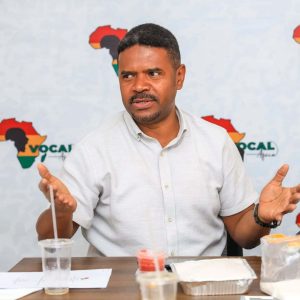
In 2024, he expanded his vision beyond Kenya by launching Vocal Africa, a pan-African organisation designed to connect grassroots activists, strengthen civic movements and amplify citizen voices across the continent. While Haki Africa remained focused on local human rights work, Vocal Africa reflected Khalid’s belief that many African countries face similar struggles over governance, accountability and shrinking civic space.
Awards and recognition
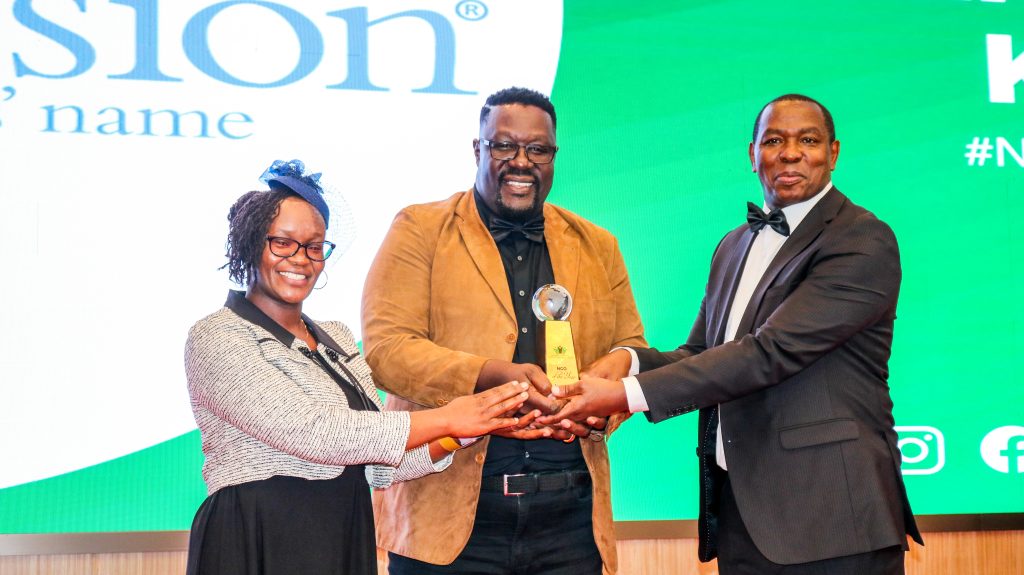
Recognition has followed years of sacrifice rather than the other way around. In 2024, Khalid received the Human Rights Defender of the Year Award alongside Boniface Mwangi and Hanifa Adan in recognition of their courage during the Gen Z movement and their advocacy for victims of police violence and enforced disappearances. The honour acknowledged what many in Kenya’s civil society had known for years—that Khalid had become one of the country’s most steadfast defenders of fundamental freedoms.
His work has come at considerable personal cost. Arrests, intimidation, death threats and relentless public scrutiny have become familiar parts of his life. Yet colleagues and critics alike acknowledge one defining characteristic: consistency.
Khalid’s consistency
Governments have changed. Security operations have evolved. Public attention has shifted from one crisis to another.
Hussein Khalid has remained.
For thousands of Kenyans searching for justice after an abduction, an unlawful arrest or an unexplained death, he has become more than an activist. He has become a constant reminder that human rights are not defended only in courtrooms or conference halls. They are defended wherever ordinary citizens refuse to let injustice become ordinary.