By Wahome Ngatia
The tools exist. The evidence is overwhelming. The money, mostly, is sitting there. So why is anticipatory action still a whisper when it should be a roar?
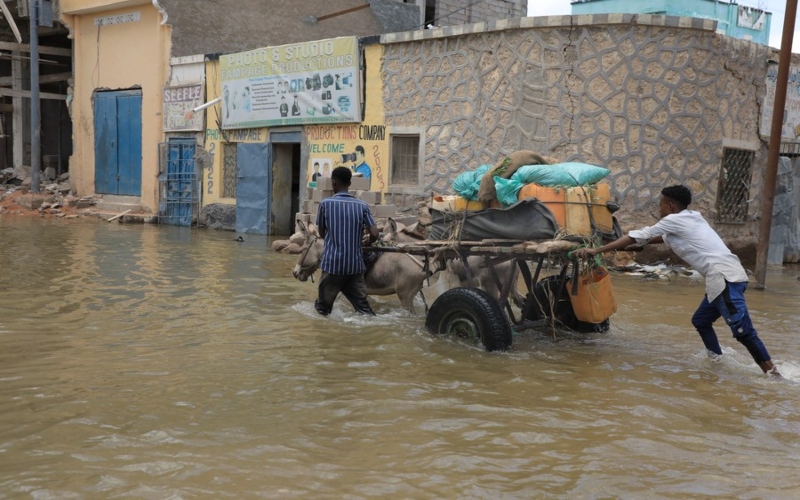
Imagine you can see a flood coming. Satellites confirm it. Weather models agree. You know — with reasonable certainty — that in three weeks, thousands of families in the river delta will lose their crops, their livestock, their savings, and perhaps their lives. You have money in a fund specifically set aside to help them. Now imagine that money doesn’t move until the water is already at their doors.
This is not a hypothetical. It is the dominant reality of how the world responds to predictable disasters. And it is exactly the logic that anticipatory action exists to break.
What Is Anticipatory Action?
Anticipatory action (AA) is deceptively simple: it is the practice of releasing pre-arranged funding and delivering assistance before a predictable disaster strikes, rather than scrambling to respond after the damage is done. It connects early warning systems — weather forecasts, drought indices, flood models — to pre-agreed plans and pre-committed money, so that when a trigger threshold is crossed, help moves automatically.
Think of it as emergency medicine, not emergency surgery. It is the humanitarian equivalent of taking an aspirin when your blood pressure spikes — not waiting for the heart attack.
The approach is built on three pillars: a forecast (what is likely to happen), a trigger (the threshold at which action is released), and pre-arranged financing (funds committed before the crisis, not negotiated during it). When all three align, communities receive cash, seeds, livestock protection or evacuation support in the critical window between warning and catastrophe.
Why It Matters: The Economics of Acting Early
The financial case for anticipatory action is as close to settled science as development economics gets. FAO estimates that for every $1 invested in anticipatory action, affected households gain up to $7 in benefits and avoided losses. WFP goes further: its evidence base suggests that acting early can save up to $34 per dollar invested over a 20-year period, while simultaneously reducing long-term recovery costs.
These are not marginal gains. They represent a fundamental reordering of how aid money works.
The humanitarian sector spends billions every year repairing damage it could have partially prevented. A 2020 analysis found that around 20% of humanitarian responses between 2014 and 2017 addressed needs from crises that were, in principle, foreseeable. Every dollar spent reactively in those situations was a dollar that did not have to be spent that way.
Who Is Doing It?
The architecture of anticipatory action is now genuinely global. By 2023, the humanitarian community had established 107 anticipatory action frameworks across 47 countries. The World Food Programme reached 6.2 million people across 44 countries through its AA portfolio in 2024 — up from 4.1 million in 36 countries the year before.
The UN’s Central Emergency Response Fund (CERF) is the single largest contributor globally, supplying roughly 50% of all pre-arranged AA funding in 2024. Between 2020 and end-2024, CERF committed a cumulative $224 million in pre-arranged funding across 22 frameworks in 20 countries, disbursing $109 million when activations were triggered. It pre-arranged $37 million in 2024 alone — ahead of floods in Bangladesh, Chad, Nepal and Niger, and droughts in Ethiopia, Somalia and Timor-Leste.
Mozambique is a textbook example of the approach working at scale. The government has integrated anticipatory action directly into its national disaster management plans, covering cyclones, floods and droughts. When forecast triggers are met, the machinery moves. WFP, FAO, and the Red Cross Red Crescent Movement have built similar pre-agreed frameworks in Bangladesh, Ethiopia, Haiti and elsewhere.
The Problem: Money That Waits Too Long
Yet for all this momentum, a damning number defines the state of the field: less than 1% of global international humanitarian assistance is allocated to anticipatory action frameworks. In 2024, that figure was 0.7%.
The paradox is acute. The tools are proven. The return on investment is exceptional. The need is urgent — nearly 240 million people currently require humanitarian assistance, according to OCHA. And yet anticipatory action remains a rounding error in global humanitarian budgets.
There is also a problem of underutilization. Pre-arranged funds that are never triggered represent a form of waste that the sector rarely discusses openly. When forecasting models fail to hit trigger thresholds — or when bureaucratic, political, and access barriers delay activation — money committed to prevention sits idle while communities absorb shocks that early action might have blunted. In fragile and conflict-affected settings, where nearly 40% of all AA activations occurred in 2024, these barriers are especially acute: weak data infrastructure, access constraints, and governance gaps make pulling the trigger harder even when the warning is clear.
Donor Behaviour: Cautious Interest in a Shrinking Pool
The donor landscape is shifting — but not fast enough, and not in the right direction on the big picture.
Total humanitarian funding fell sharply in 2024: Organisation for Economic Co-operation and Development (OECD) members contributed $24.2 billion in humanitarian aid, a 9.6% drop from the previous year. More alarmingly, funding could contract by between 34% and 45% by end-2025 compared to 2023 levels, driven by cuts from major bilateral donors including the United States. Into this shrinking pool, anticipatory action is fighting for space.
Financing for AA frameworks did triple over a three-year period leading into 2024 — a genuine achievement. CERF’s pre-committed AA funding grew from $48 million in 2020 to $124.7 million by November 2025. The Grand Bargain’s Caucus on Scaling Up Anticipatory Action convened formally in 2024, with signatories committing to clearer funding targets, coordination mechanisms, and tracking frameworks. WFP’s AA portfolio reached $100 million in 2024, including $72.6 million in pre-arranged financing.
But donors remain risk-averse in a particular way: they are comfortable funding a disaster after it happens — the images are on television, the accountability is clear — but less willing to pre-commit funds to a forecast that may not materialize. This is a rational bureaucratic instinct, and a harmful one. Some AA frameworks have built “no-regrets” clauses into their trigger design — accepting that a small percentage of activations will occur when the forecast doesn’t fully materialize — as the cost of speed and coverage.
Awareness: Still a Niche Conversation
Despite a decade of growth, anticipatory action remains largely unknown outside specialist humanitarian and climate-finance circles. It is absent from mainstream political discourse and rarely surfaces in donor government budgets as a named line item. Humanitarian financing to AA initiatives is not even systematically collected in standard OECD Development Assistance Committee datasets — a gap that both reflects and reinforces its marginal institutional status.
The sector knows this. The Anticipation Hub, a global platform established to track and share evidence on AA, is an attempt to build the information commons the field needs. But the political will to move from pilot to norm has not arrived.
The Verdict
Anticipatory action is one of the clearest cases in international development where the evidence has outrun the political will. The tools work. The economics are compelling. The frameworks exist. What the field needs now is not more pilots — it needs systems-level commitment: multi-year, flexible, and predictable financing; better forecast infrastructure in under-served countries; and donors willing to sign cheques before the crisis photographs exist.
El Nino is coming according to the World Meteorological Organization (WMO). We can see it. The only question left is whether we’ll move before it arrives.